Pothole Repair in Winston-Salem, NC
Hot-mix patches and infrared repairs that bond cleanly to the surrounding pavement — no cold-patch band-aids that pop out two storms later.
Get My Free Pothole Repair Estimate (336) 276-1256Pothole Repair in Winston-Salem, NC
A1 Asphalt Winston-Salem repairs potholes on driveways, parking lots, and private roads across Winston-Salem and the Piedmont Triad. A pothole is a structural failure, not a cosmetic issue — it means water has gotten under the surface, broken down the base, and pushed an opening through. A proper repair removes the failed material, addresses the base damage, and patches with hot mix bonded to a clean tack coat. A cold-patch dump-and-tamp job buys you maybe a season. Call (336) 276-1256 for a real fix.
How Potholes Form in the Piedmont
Most potholes in Winston-Salem trace back to one cause: water that got into a crack during fall rain, froze in December or January, expanded by 9 percent, and pushed the surrounding asphalt outward. After repeated freeze-thaw cycles, the surface above the trapped water debonds, traffic load pushes it down, and a chunk pops out. The pothole you see is the visible part of a larger failure — the base underneath is almost always wetter, softer, and more compromised than the surface opening suggests. Heat aggravates the cycle. UV oxidation through summer dries out the binder and makes the surface brittle, which makes it easier for the winter water-ice cycle to break it open. The Triad's combination of hot summers and cold-snap winters is unusually hard on asphalt for that reason — neither extreme alone would do this much damage; the combination is what creates the pothole pattern.


Request a Pothole Repair Estimate
Limited Slots Available This Month!
Saw-Cut Patches vs. Throw-and-Roll
Throw-and-roll repairs — where cold patch gets shoveled into a hole and tamped down — are sometimes the right call for an emergency winter fix on a high-traffic surface when hot-mix plants are closed. They're not a real repair; they're a hold-over until conditions support a permanent fix. A real pothole repair is a saw-cut patch. We saw-cut clean rectangular edges around the failure, extending past the visible opening by enough to reach sound material on all sides. We excavate the failed surface plus any compromised base, dry the excavation if it's wet, install fresh aggregate base if needed, apply tack coat to every vertical edge and the bottom, and patch with hot mix compacted in lifts. Done correctly, the patch is structurally equivalent to the surrounding pavement, sheds water cleanly, and lasts as long as the original install would have. The visual is also better — clean rectangular patches versus the irregular blob shapes of throw-and-roll repairs.
Infrared Repair — When and Why
Infrared patching is a third option that fits a specific case very well. An infrared heating panel is placed over the failed area, which softens the existing asphalt to a workable temperature. The softened material is raked out, fresh hot mix is added, the area is regraded, and a roller compacts the patched section flush with the surrounding pavement. The advantage is that there's no joint — the patch fuses with the surrounding asphalt rather than butting against a saw-cut edge — and water can't get into the perimeter the way it can with a conventional patch. Infrared works best on shallow surface failures, raveled patches, fuel-spill damage, and small to mid-sized potholes where the base is still sound. It's not the right call for deep base failures or large failures that would require excavation. When it fits, the result is the cleanest, longest-lasting visible patch repair available.
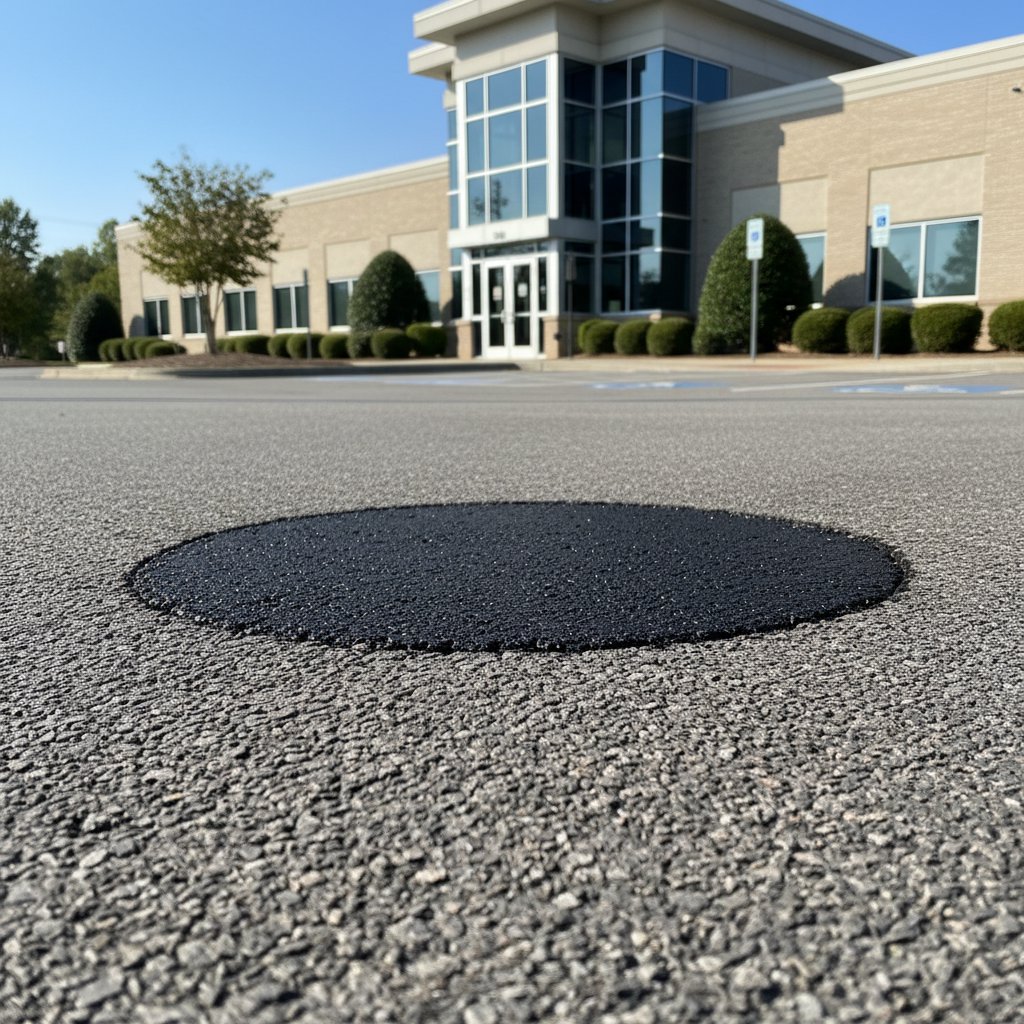
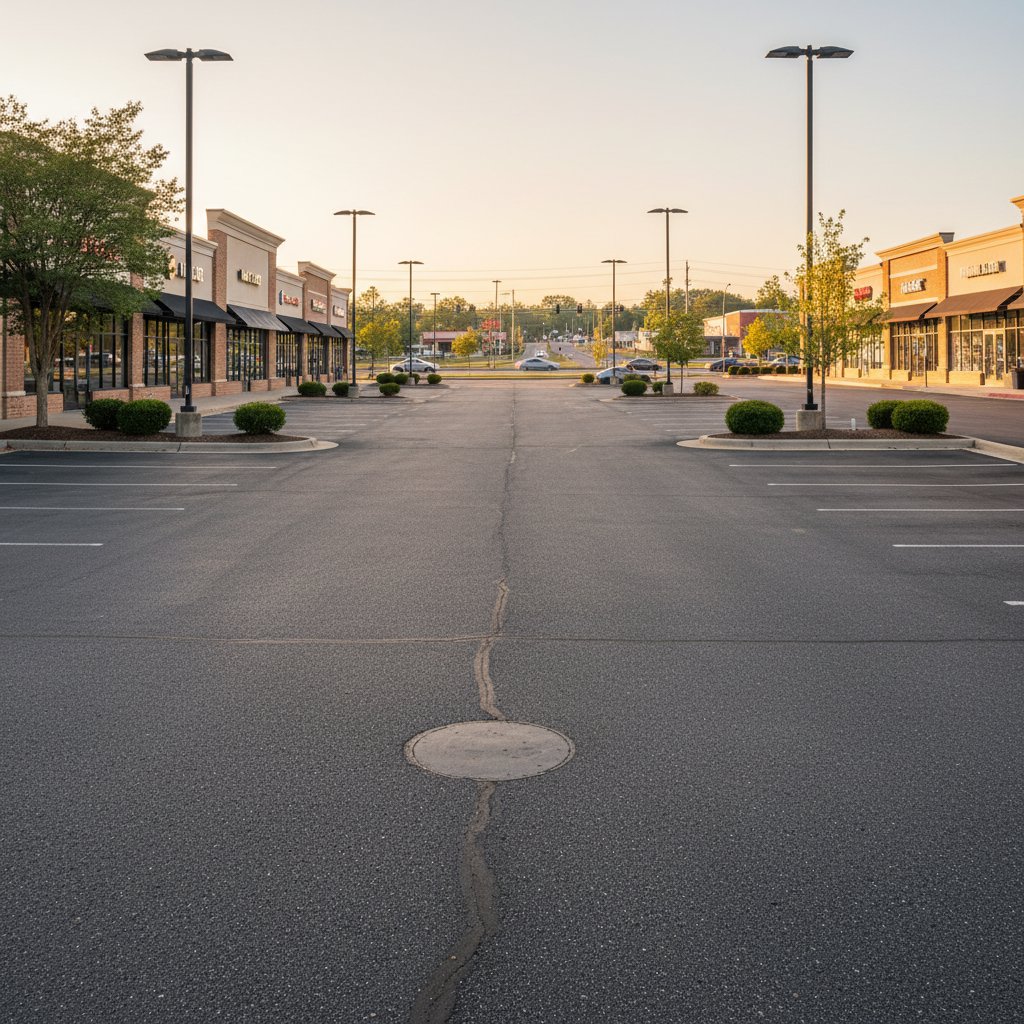
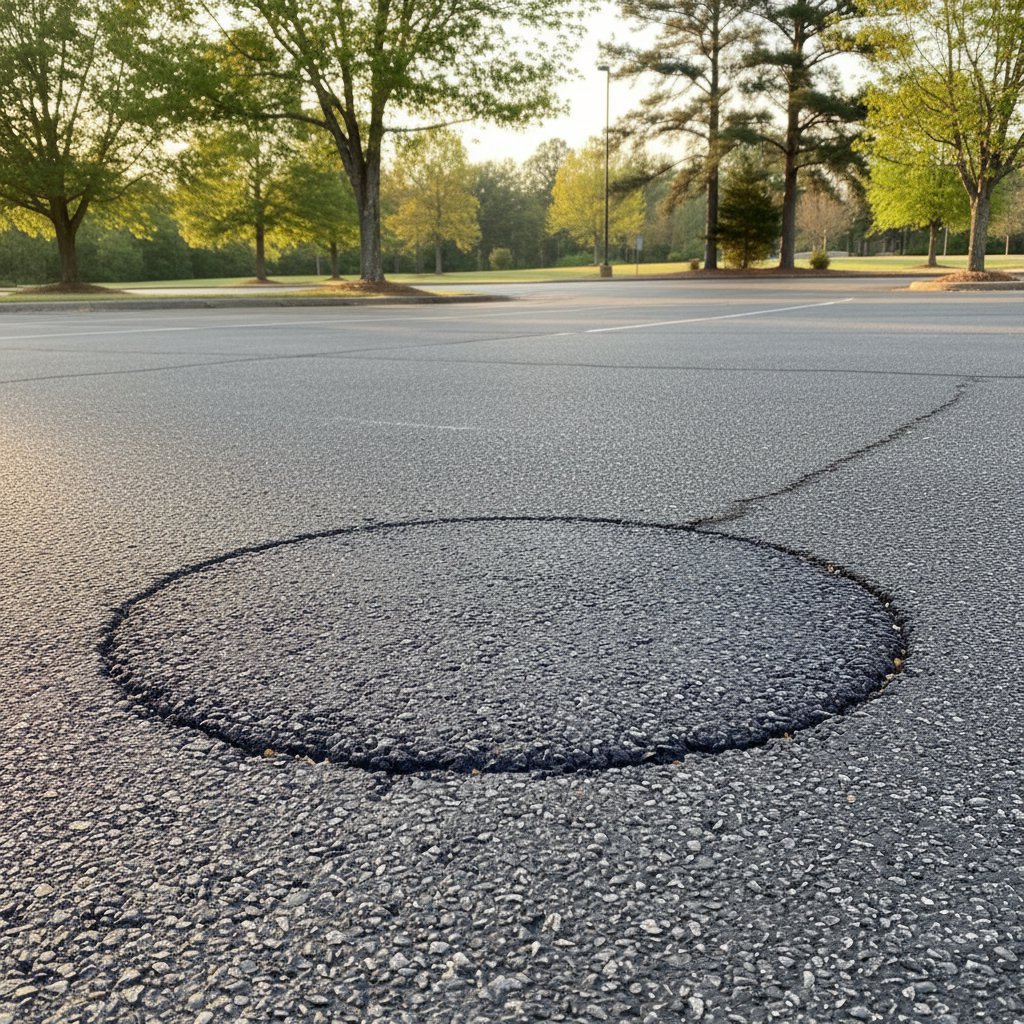
Recent Pothole Repairs in Winston-Salem
Signs You Need Pothole Repair Now
These conditions are usually about to get worse — fast.
Visible Hole Through Surface
If you can see through the asphalt to the base, water is actively getting in. Every storm makes the failure larger.
Crumbling Edges Around an Existing Pothole
Potholes grow at the edges. Spalling and crumbling around a hole means the next round of vehicles will widen it significantly.
After Winter Cold Snap
Most Piedmont potholes appear in February and March after freeze-thaw damage. Fix them in spring before summer heat makes the damage permanent.
Sunken Patch That Used to Be Flush
A patch that's settling below grade means it was placed over a base that's still failing. It needs to come out and be rebuilt from the bottom.
How We Repair Potholes
Four steps from saw-cut to finished patch.
Failure Assessment
We probe the hole, check the surrounding pavement and base, and decide whether the right fix is a saw-cut patch or an infrared repair.
Saw-Cut and Excavation
Clean rectangular cuts are made past the visible failure to sound pavement. Failed material and compromised base are excavated.
Base Repair and Tack Coat
Fresh aggregate base goes in if needed, then tack coat is applied to every vertical edge so the hot-mix patch bonds permanently.
Hot-Mix Patch and Compaction
Hot mix is placed in lifts, compacted with a roller or plate to density, and finished flush with the surrounding surface.
What Our Clients Say
"Our driveway off Robinhood Road was alligator-cracked from years of freeze-thaw. The crew milled the worst sections, repaired the base, then laid a clean overlay. Two winters in and it still drains right and looks like the day they finished."

Got a Pothole That Needs to Go?
Get a free written estimate for a hot-mix pothole repair that bonds to the surrounding pavement and holds through winter. No cold-patch shortcuts.