Asphalt Repair in Winston-Salem, NC
Hot-mix patches and full-depth repairs that bond seamlessly to the surrounding pavement — no cold-patch shortcuts that pop out next winter.
Get My Free Repair Estimate (336) 276-1256Asphalt Repair in Winston-Salem, NC
A1 Asphalt Winston-Salem repairs asphalt damage across Winston-Salem and the Piedmont Triad — driveways, parking lots, private roads, and apartment property surfaces. The right repair depends on what failed and why. Surface damage gets a different fix than base failure, and freeze-thaw potholes get a different fix than load-related ruts. We diagnose the cause before we patch, then use the repair method that actually addresses the underlying problem. Call (336) 276-1256 for an on-site assessment and a written scope.
Diagnosing What's Actually Failing
Most asphalt repair calls in Winston-Salem start with a customer pointing at a hole or a cracked patch and asking for a fix. The work starts before that — figuring out whether the problem is in the surface, the base, the drainage, or all three. A pothole in the middle of an otherwise sound driveway is usually a freeze-thaw failure where water got into a crack and pushed the surface open. A ribbon of alligator cracking in a drive aisle is usually a base failure under sustained truck traffic. A sunken patch where a utility cut was made is usually under-compaction during backfill. Each one needs a different repair, and patching the wrong thing means the failure shows back up in one or two seasons. We probe the area, look at drainage patterns, and check adjacent pavement before we commit to a repair method.


Request a Repair Estimate
Limited Slots Available This Month!
Saw-Cut Patches and Full-Depth Repairs
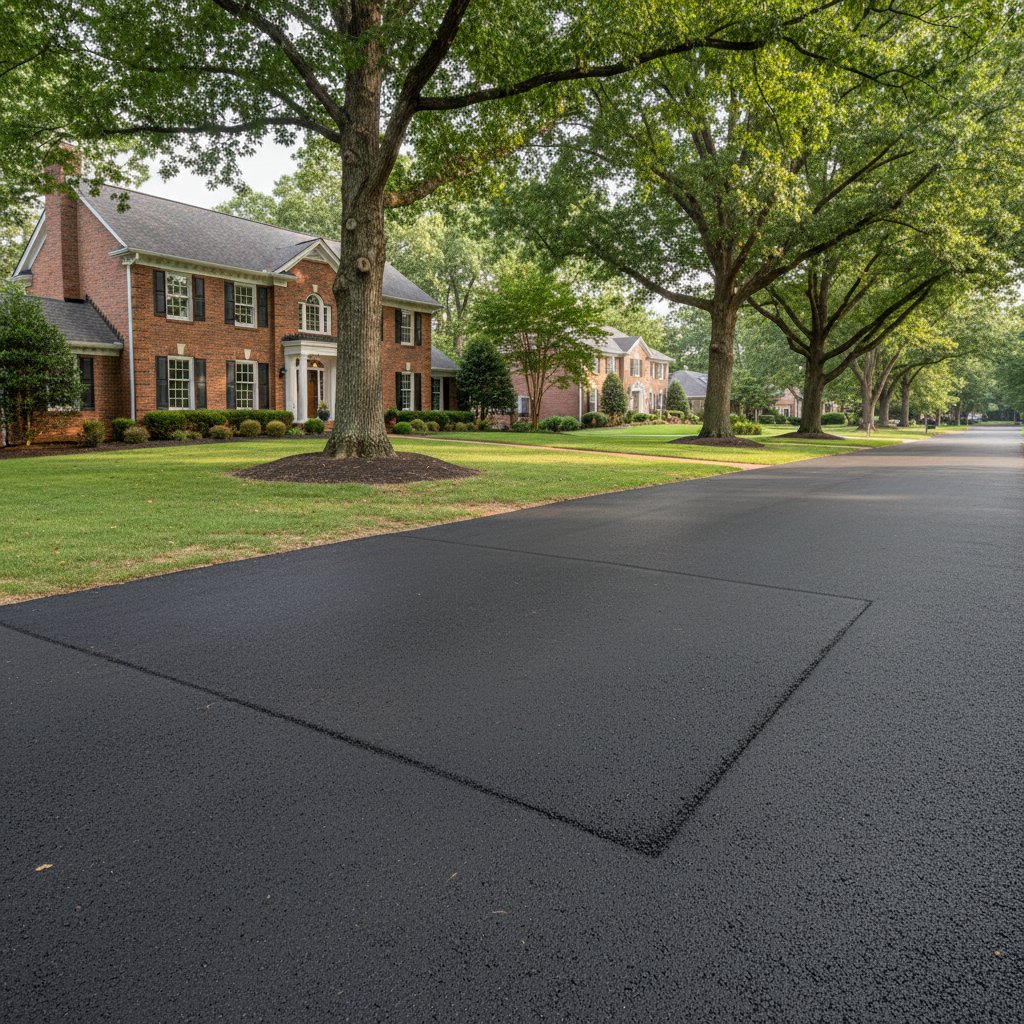
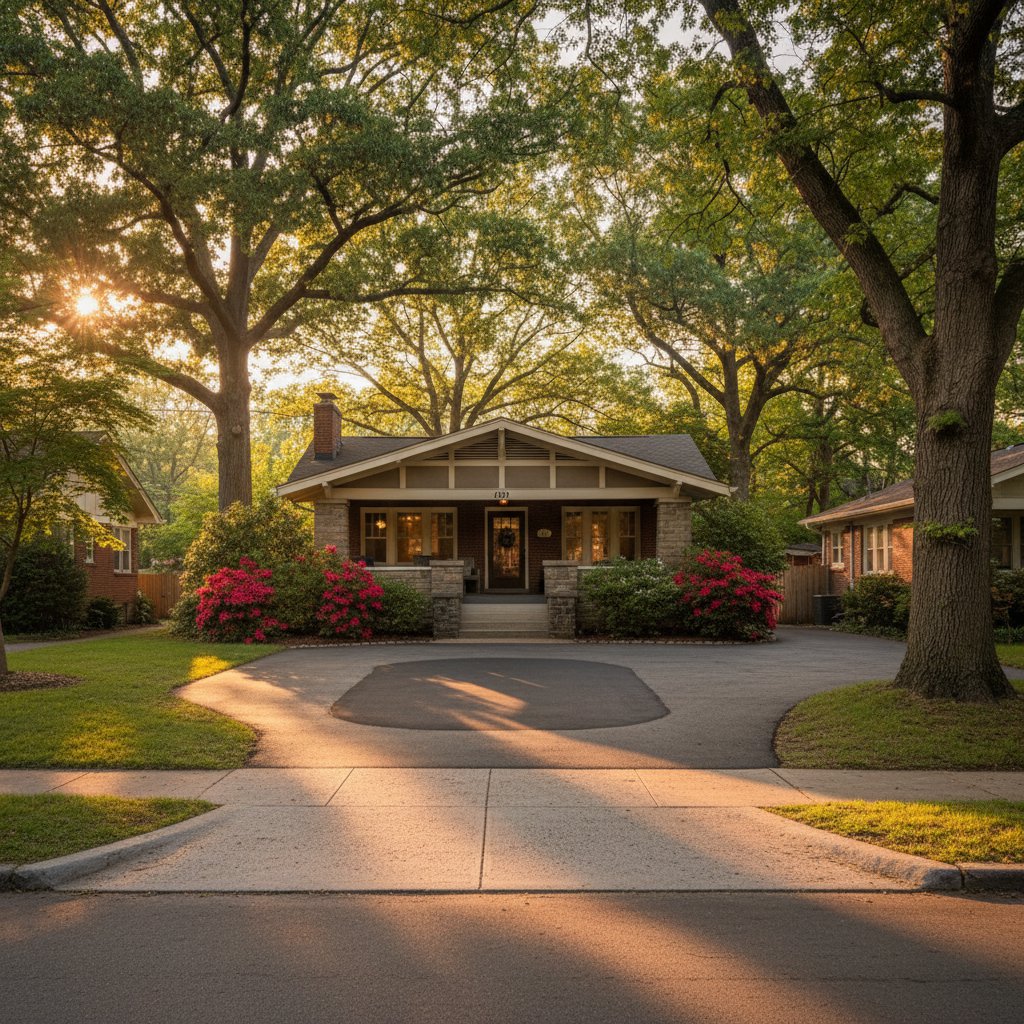
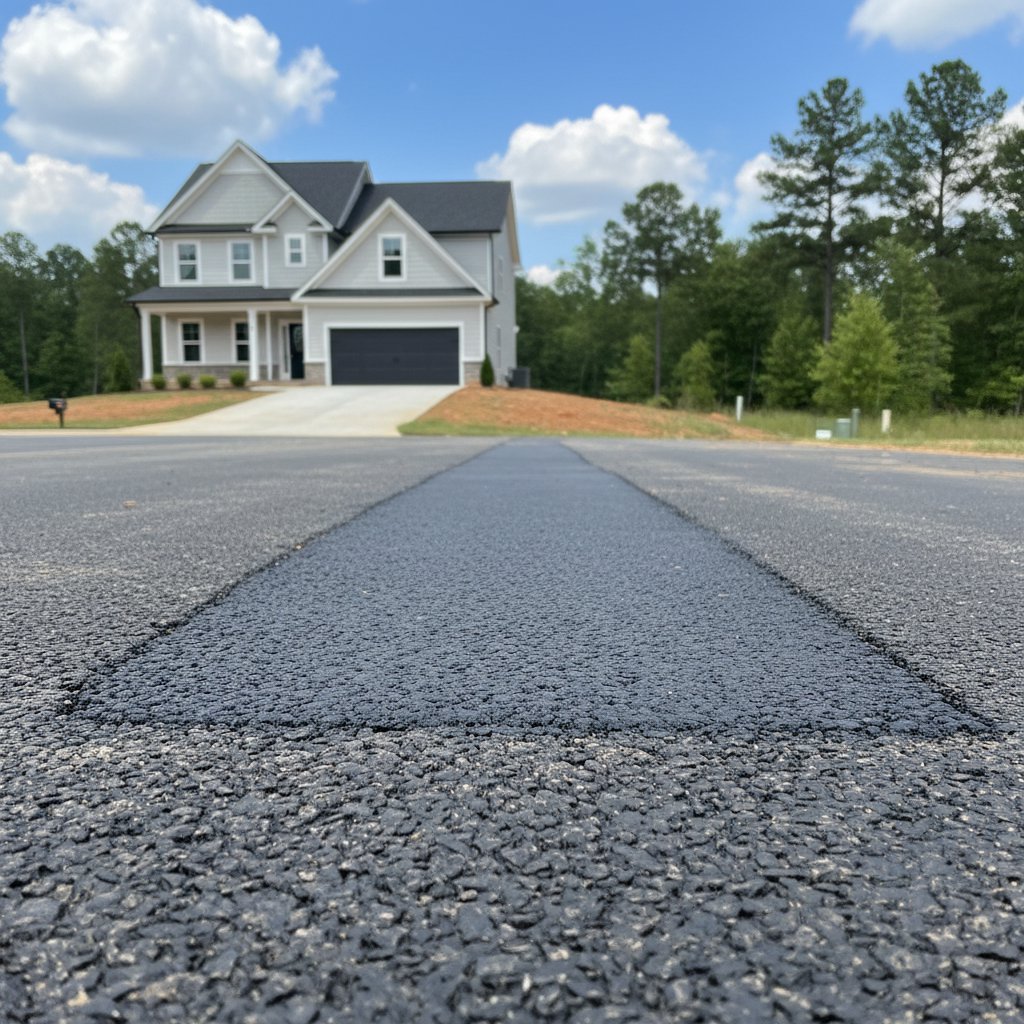
For localized failures, the right repair is a saw-cut patch. We saw-cut clean rectangular edges around the failed area, excavate the failed pavement and any compromised base, install fresh aggregate base if needed, apply tack coat to the vertical edges, and patch with hot mix compacted in lifts. Done right, a saw-cut patch is invisible from a distance and structurally equivalent to the surrounding pavement. The reason most patches fail isn't the material — it's the prep. Edges that weren't saw-cut leave ragged transitions where water gets in; tack coat that was skipped lets the patch debond from the existing surface; lifts that weren't compacted properly settle in the first six months. We do the prep, then we patch. For base failures, the patch has to go full-depth — through the surface, through the base, down to sound sub-grade — and rebuild from there. Half-measures don't hold.
Hot Mix vs. Cold Patch — and When Each Has a Place
Hot-mix asphalt is the only material that produces a long-term repair. It bonds to the existing pavement through the tack coat, compacts to proper density, and shares load with the surrounding surface. Cold patch — the bagged stuff you can scoop into a hole and tamp — has its uses, but a long-term repair isn't one of them. We use hot mix on every repair we run, hauled to the site at temperature. There are exceptions: an emergency winter pothole in a high-traffic commercial lot during a freeze, when hot-mix plants are closed, sometimes gets a cold-patch hold-over until we can come back with hot mix in the spring. We're upfront about that — a cold patch is buying time, not buying a fix, and the price reflects that. Infrared patching is a third option for surface-level repairs where we can reheat the existing asphalt, add fresh hot mix, and roll a seamless repair without saw-cutting. It's faster, leaves no joint, and works well on shallow surface failures.
Recent Asphalt Repairs in Winston-Salem
Signs Your Pavement Needs Repair
When to call before a small failure turns into a big one.
Cracks Wider Than Quarter Inch
Once cracks open this wide, water gets to the base. Freeze-thaw expands the damage every winter the crack stays open.
Visible Potholes
A pothole means the surface has already failed and the base is being eroded. Repair now is cheaper than rebuild later.
Sunken or Settled Areas
Pavement that's dropped relative to the surrounding surface — often at utility cuts — needs full-depth repair to stop the spread.
Soft Spots That Flex Under Load
If you can feel the pavement give under foot or under tire, the base has failed underneath and a surface patch won't hold.
How We Repair
Four steps from assessment to finished patch.
On-Site Assessment
We probe the failure, check drainage and base condition, and decide whether it's a surface repair, full-depth patch, or something larger.
Saw-Cut and Excavation
We saw clean rectangular edges around the failed area, remove the failed material, and excavate down to sound base or sub-grade.
Base Repair and Tack Coat
Aggregate base is installed and compacted if needed, then tack coat is applied to vertical edges so the hot mix bonds to the existing pavement.
Hot-Mix Patch and Compaction
Hot mix is placed in lifts, compacted to density, and finished flush with the surrounding surface so the repair sheds water cleanly.
What Our Clients Say
"Our driveway off Robinhood Road was alligator-cracked from years of freeze-thaw. The crew milled the worst sections, repaired the base, then laid a clean overlay. Two winters in and it still drains right and looks like the day they finished."

Need Asphalt Repair?
Get a free written estimate from a Piedmont contractor that diagnoses the cause before patching the symptom. Hot-mix repairs that bond, compact, and last.